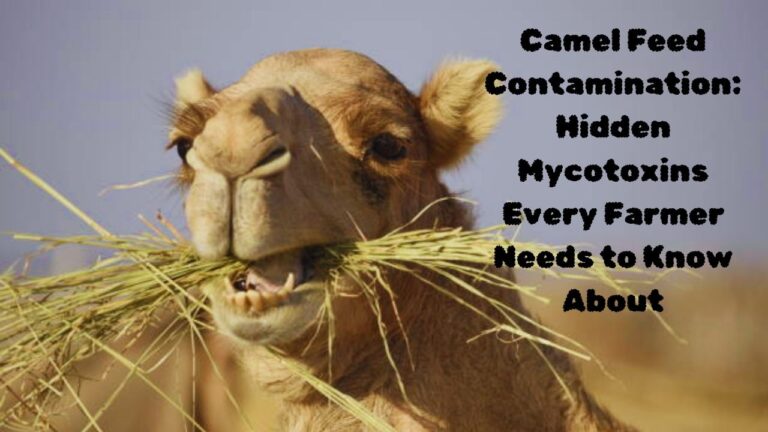
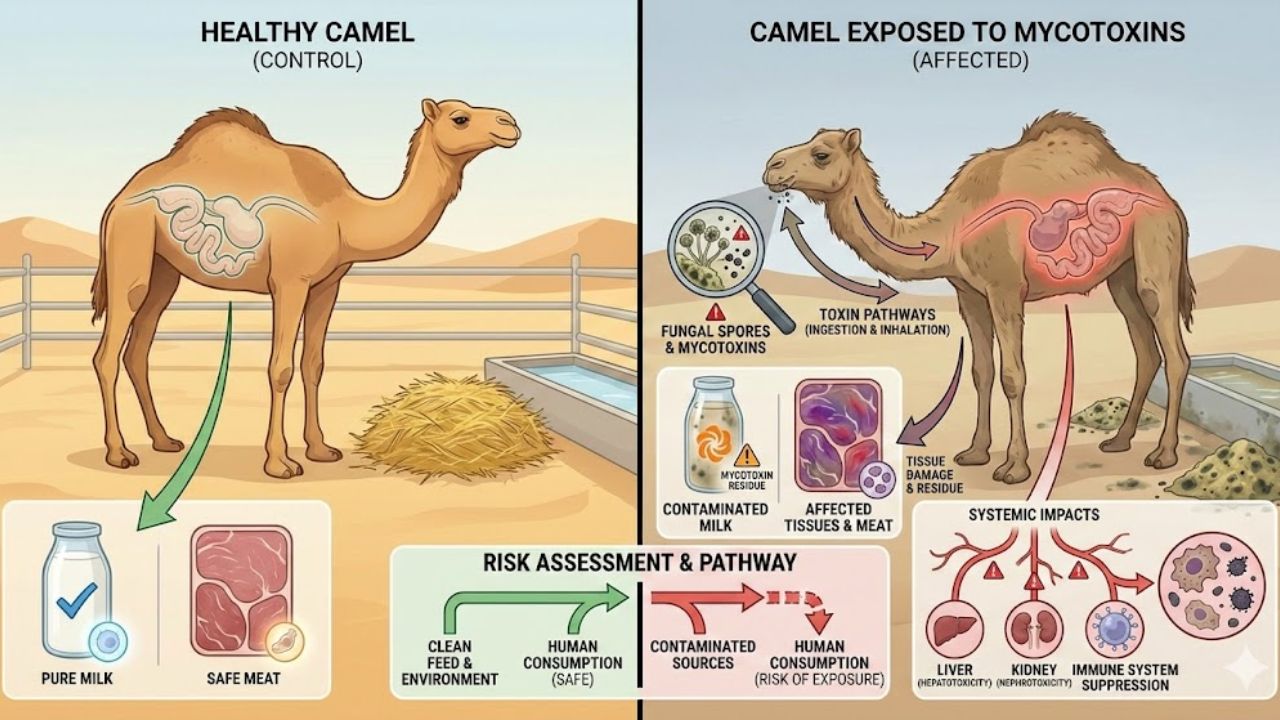
The effects of myco toxins on camel meat and milk are becoming a serious problem today because these toxins directly affect the quality, safety and market value. When contaminated fodder is included in the camel’s diet, these toxins quickly enter the body and reach the meat and milk.
These myco toxins reduce milk production, weaken the animal and release particles that can be harmful to humans. That is why it is important to understand the effects of myco toxins on camel meat and milk and take timely measures to prevent this contamination.
What Mycotoxins Are and Why They Threaten Camel Meat and Milk Safety
Myco toxins are toxic chemicals that are produced by certain fungi in fodder, grain and feed. When camels eat this contaminated food, these toxins are directly absorbed into their bodies and reach the milk and meat. They have no taste, color or smell, so they quietly enter the food chain.
These toxins pose a major threat to the safety of camel meat and milk because they reduce production, cause physical weakness and can release particles harmful to human health. This risk is exacerbated when feed storage is poor or the environment is humid.
Common Mycotoxin Sources in Camel Feed and the Desert Environment
Myco toxins in camel feed are mostly formed from spoiled grains, damp deposits, and moldy pasture materials. The harsh desert environment also accelerates the growth of these toxins, as hot temperatures and improper storage allow mold to grow.
Common sources of myco toxins in camel feed
- Grains and their by-products
- Maize, barley, wheat bran
- Mold-producing sources: Aspergillus, Penicillium
- Dry fodder and pasture materials
- Dry grass, straw, green fodder
- Main fungi:Fusarium
Role of desert environment
- Even a slight increase in humidity increases mold
- High temperatures spoil grains rapidly
- Forage becomes contaminated due to improper or open storage
- Imported feed is often affected by moisture and travel
- Multiple toxins can be produced together in a single feed
Types of Mycotoxins Found in Camel Products
When camels consume contaminated feed the toxins can pass into their milk and sometimes into their meat. These mycotoxins pose real safety concerns because they enter food products quietly and remain difficult to detect without proper testing.
- Aflatoxin M1 (AFM1)
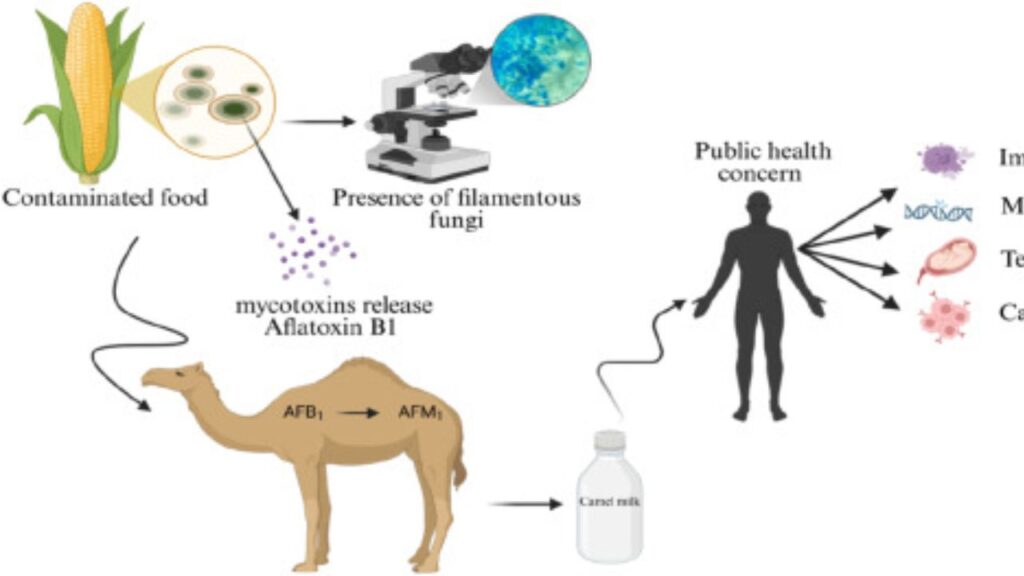
- Formed when camels ingest feed containing Aflatoxin B1
- Known to affect liver function and weaken the immune system
- Formed when camels ingest feed containing Aflatoxin B1
- Fumonisins (FUM)
- Common in spoiled grains, especially maize
- Linked to liver stress and disruptions in the nervous system
- Common in spoiled grains, especially maize
- Zearalenone (ZEN)
- Produced by Fusarium fungi in contaminated feed
- Can trigger hormonal imbalances and reduce milk quality
- Produced by Fusarium fungi in contaminated feed
- Ochratoxin A (OTA) — occasionally detected
- Damages kidneys and affects overall metabolic health
- Mostly found in poorly stored, moisture-affected feed
- Damages kidneys and affects overall metabolic health
How Mycotoxins Affect Camel Health and Productivity
Immune Suppression and Internal Organ Damage
Myco toxins overwhelm the immune system and slow down the production of important immune cells. This makes any animal susceptible to infections that would normally not cause harm. These toxins damage internal organs, especially the liver and spleen, which filter out toxins and do their job. Over time, this reduces the efficiency of organs, digestion, and metabolism.
Reduced Milk Yield, Growth Rate and Reproductive Issues
Myco toxins directly reduce the milk production of camels because they cause hormonal imbalances in the body. This also results in slower growth and reduced weight gain. Furthermore, the reproductive system is also affected, which can reduce breeding and pregnancy success. All of these factors combined not only cause production losses but also affect the quality of milk and meat.
Impacts of Mycotoxins on Camel Milk Quality and Consumer Safety
Aflatoxin M1 in Camel Milk and Its Danger to Human Health
Aflatoxin M1 (AFM1) in camel milk poses a serious health risk to humans. It is a known carcinogen that can damage the liver and is particularly dangerous for children, who consume more milk. This toxin forms from Aflatoxin B1 in contaminated feed and is then excreted into the milk.
Health Risks of Aflatoxin M1 (AFM1)
- Carcinogenicity: Classified by WHO as a Group 1 human carcinogen and linked to liver cancer
- Liver Damage: Causes hepatotoxicity and harms liver cells
- Immunosuppression: Weakens the body’s immune system
- Genetic Damage: Can cause DNA mutations and genetic issues
- Other Toxic Effects: Acute exposure may lead to nausea, vomiting, and abdominal pain
- Vulnerability of Children: Children are at higher risk due to higher milk consumption
Effects on Nutritional Composition, Taste and Marketability
Myco toxins affect the nutritional properties of milk and meat. They can reduce the amount of protein, vitamins and minerals, which reduces nutrition. They can cause bitterness or off-flavors and can also impair the appearance of the milk or meat. As a result, their sales in the market are reduced and consumer confidence is negatively affected, which increases the financial losses of production.
Impacts of Mycotoxins on Camel Meat Quality and Safety
Bioaccumulation of Mycotoxins in Camel Tissues
Myco toxins gradually accumulate in the camel’s body, especially in the liver, kidneys and fatty organs. These toxic components are transferred to milk and meat, posing a threat to human health.
Continuous consumption of contaminated food causes these toxins to accumulate, reducing the efficiency of internal organs and increasing the risk of disease, which affects the quality and safety of meat and milk.
Meat Shelf Life, Texture and Chemical Alterations
Myco toxins reduce the shelf life of meat because they increase oxidation and bacterial growth. The texture of the meat may become soft or mushy and its color may also change. The chemical composition changes, such as affecting the quality of proteins and fats, which weakens both taste and nutrition. As a result, the meat becomes difficult to sell in the market and consumer confidence is affected.
Human Health Risks Linked to Contaminated Camel Meat and Milk
Carcinogenic, Immunotoxic and Gastrointestinal Effects
Myco toxins can have serious effects on human health. They are carcinogenic and can cause tumors in the liver and other organs. They also sensitize your immune system to them. They can also cause gastrointestinal problems such as nausea, vomiting, stomach pain, and indigestion. Long-term exposure can cause problems, especially for children and adults.
Why Mycotoxin Levels Often Go Undetected in Arid Regions
Monitoring of camel feed and milk in arid regions is often inadequate, leading to toxins going undetected. Humidity and temperature fluctuations in stored feed can mask the growth of toxins.
Lack of laboratory testing, limited resources, and weak surveillance systems also compound the problem. As a result, dangerous toxins in produce can reach consumers without any obvious symptoms.
How to Prevent Mycotoxin Contamination in Camel Meat and Milk
Best Practices for Feed Storage and Moisture Control
It is important to store camel fodder properly and control humidity to prevent lice breeding. To store fodder in a dry and safe place, use plastic or sealed containers. Check stored grain regularly and read any changes. It is best to keep the fodder covered to maintain proper temperature and circulation.
Safe Feed Sourcing, Testing and Mycotoxin Binders
Sourcing safe feed, testing it regularly, and using mycotoxin binders are crucial for camel health and product safety. These steps help reduce toxic compounds in feed and ensure the quality of milk and meat.
- Secure Feed Sourcing: Buy feed from trusted suppliers and avoid old or contaminated stock
- Feed Testing: Regularly test feed using field kits or laboratory analysis for contamination
- Use of Mycotoxin Binders: Add specific binders to feed to reduce toxin absorption in the animal
- Monitoring Mixed Feed: Check toxin levels when combining feeds from different sources
- Record Keeping: Maintain records of feed source, date, and testing results to ensure consistent quality
Farm Management Strategies That Reduce Fungal Growth
Proper farm management can reduce the growth of mold in camel feed and the environment. Store feed and grain in a dry, ventilated, and clean place. Maintain farm cleanliness, pay attention to insect and rodent control, and remove old or spoiled feed promptly.
Maintain appropriate animal numbers to reduce dirt and humidity. These strategies not only reduce levels of myco toxins but also improve the quality and safety of milk and meat.
Final Thoughts
The presence of Myco toxins in camel meat and milk is a silent but serious threat that not only affects animal health and production but is also harmful to human health. These toxins affect milk production, meat quality and marketability.
However, these risks can be mitigated through safe feed, proper storage, regular testing, toxin binders and sound farm management strategies. Timely measures and awareness creation not only improve production but also ensure safe and healthy products for consumers.