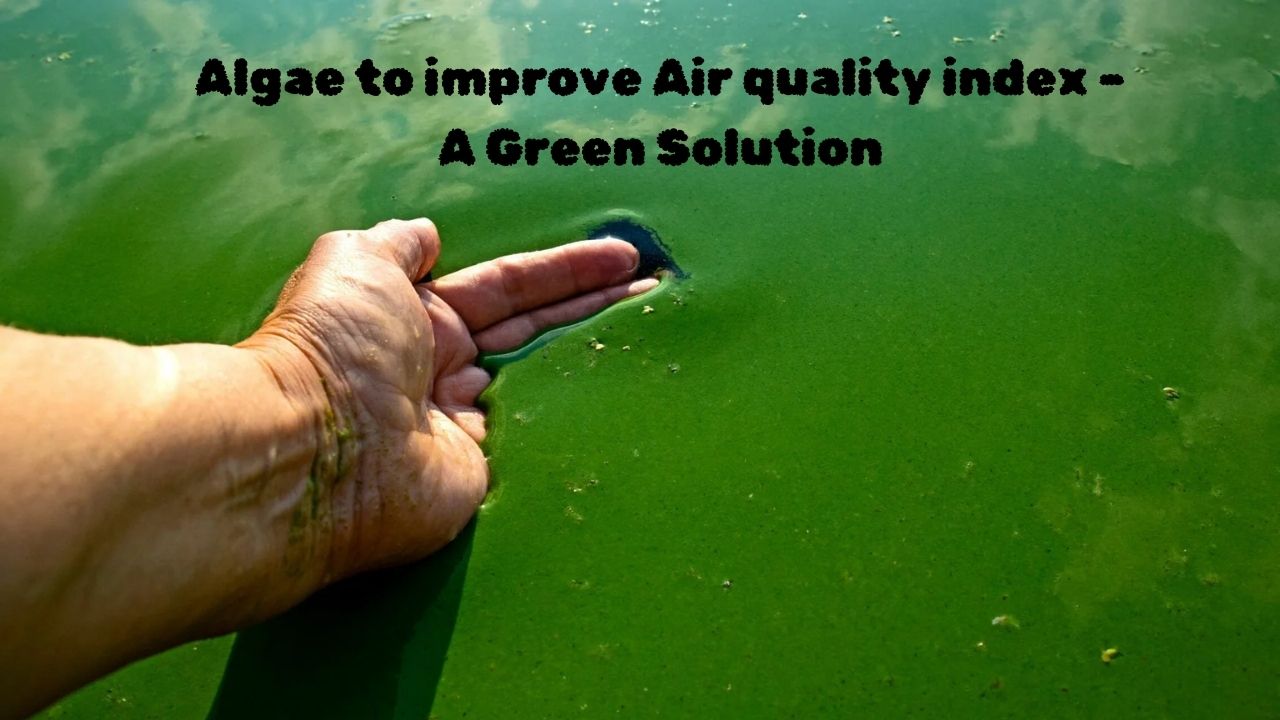
Air pollution has reached alarming levels and is directly affecting human health and quality of life. In this situation, improving the Air Quality Index (AQI) is of utmost importance, and also – a green solution – is emerging as an effective and natural way to improve the Air Quality Index. Aloes absorb carbon dioxide and other harmful pollutants and release oxygen, providing a sustainable alternative to traditional air purification systems.
This green solution is effective in both indoor and outdoor environments, be it urban walls or industrial environments. By using aloes’ natural ability to purify air, we can effectively improve AQI, reduce environmental impacts, and create healthier spaces for communities around the world.
What is the Air Quality Index
The Air Quality Index (AQI) is a standardized measure of the level of air pollution. It is calculated by taking into account the concentration of various pollutants such as particulate matter (PM2.5 and PM10), nitrogen dioxide, sulfur dioxide, carbon monoxide, and ozone. The higher the AQI, the more polluted the air is and the greater its negative health effects.
The AQI is usually expressed on a scale of 0 to 500, where 0–50 is considered safe for health, 51–100 is considered moderate, 101–150 is considered hazardous to health, 151–200 is considered very hazardous, 201–300 is considered severely hazardous, and 301–500 is considered extremely hazardous. The index provides guidance for urban planning, public health awareness, and environmentally friendly measures such as the use of air quality indicators to improve air quality.
AQI is important not only in urban areas but also in industrial and indoor environments, as it provides people with immediate and clear information about the current air pollution conditions and helps them take appropriate protective measures.
Common Causes of Poor AQI
Several factors contribute to poor air quality, affecting the Air Quality Index (AQI). These are mainly caused by human activities and some natural events, which release harmful gases and particles into the air.
- Burning of Fossil Fuels: Vehicles, power plants, and residential/commercial heating release pollutants like carbon monoxide (CO), nitrogen dioxide (NO₂), and sulfur dioxide (SO₂).
- Industrial Activities: Factories and manufacturing processes emit a variety of harmful gases and particulate matter.
- Transportation: Vehicle exhaust contributes significantly to air pollution by releasing dangerous gases and fine particles.
- Agriculture: Farming activities release ammonia and other pollutants into the atmosphere.
- Construction and Demolition: Building and demolition projects generate dust and particulate matter, especially in urban areas.
- Domestic Sources: Burning wood or waste for heating and disposal increases local air pollution.
These factors collectively worsen AQI, and in certain weather conditions, pollutants can become trapped, further deteriorating air quality.
How Algae Can Improve Air Quality
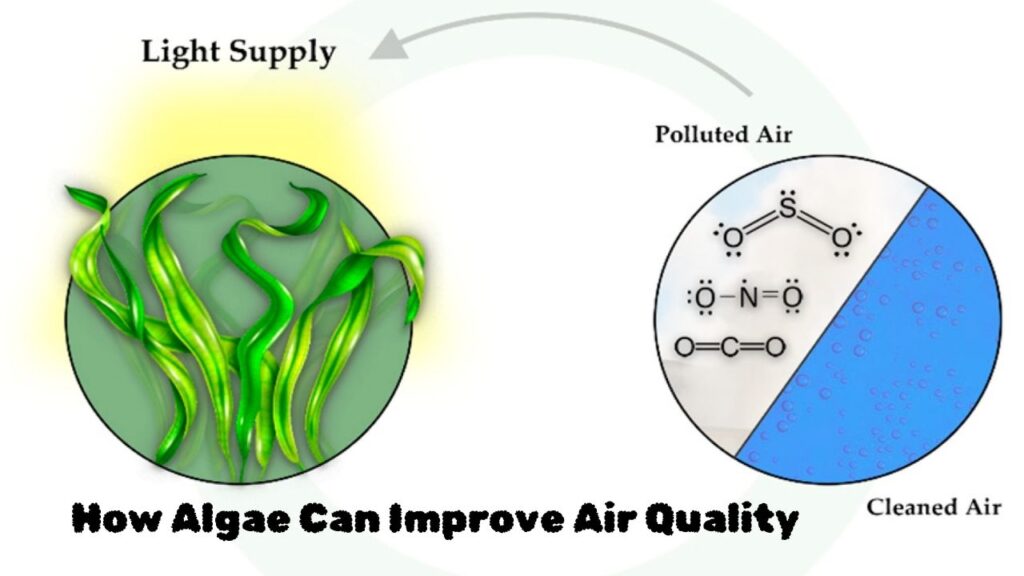
Algae naturally clean the air by absorbing carbon dioxide (CO₂) and releasing oxygen (O₂) through photosynthesis. They can also capture pollutants like volatile organic compounds (VOCs) and fine particles, converting them into biomass, which helps improve air quality efficiently.
- CO₂ Absorption & Oxygen Production: Algae take in CO₂ and release oxygen, improving air freshness.
- Pollutant Removal: They can absorb harmful gases and fine particulate matter from the air.
- Biomass Conversion: Captured pollutants are turned into harmless organic matter.
- Efficient Oxygen Generation: A small algae setup can produce enough oxygen for multiple people in a day.
The Science Behind Algae and Air Purification
The ability of algae to purify air is primarily based on photosynthesis. In this process, algae use sunlight to absorb carbon dioxide (CO₂) and release oxygen (O₂). They also capture other pollutants, such as fine particles and volatile organic compounds (VOCs), converting them into biomass, which helps improve air quality naturally and efficiently.
- CO₂ Absorption through Photosynthesis: Algae take in carbon dioxide and convert it into oxygen, releasing it back into the environment.
- Pollutant Removal: Algae captures fine particulate matter and VOCs, reducing harmful substances in the air.
- Enhanced Oxygen Production: Algae increases oxygen levels in the surrounding air, contributing to healthier, cleaner air.
- Biomass Conversion: Captured pollutants and CO₂ are transformed into biomass, which can be safely used or disposed of.
Types of Algae Effective for AQI Improvement
Not all algae are equally effective at improving air quality. Certain types are especially efficient at absorbing carbon dioxide, producing oxygen, and capturing other air pollutants.
- Microalgae: Small species like Chlorella and Spirulina perform fast photosynthesis, absorb CO₂, and convert VOCs into biomass.
- Cyanobacteria: Also known as blue-green algae, they are effective at reducing pollutants and increasing oxygen levels.
- Planktonic Algae: Found on water surfaces, these algae help capture airborne pollutants and purify the surrounding air.
- Macroalgae (Seaweed): Larger algae are used in industrial or large-scale purification systems to filter higher levels of air pollution.
Choosing the right type of algae depends on the environment and the scale of air purification needed to effectively improve the AQI.
Algae’s Role in Carbon Capture and Oxygen Production
Algae naturally play an important role in purifying the air and making it suitable for human health by absorbing carbon dioxide (CO₂) and releasing oxygen (O₂). During the process of photosynthesis, algae use sunlight to convert CO₂ into oxygen, which reduces environmental pollution and weakens the effect of greenhouse gases.
Microalgae and cyanobacteria species produce significant amounts of oxygen even in small areas, while absorbing volatile organic compounds (VOCs) and other harmful particles and converting them into biomass. This process not only improves AQI but also provides beneficial and sustainable air for both the environment and human health.
Innovative Applications of Algae for Cleaner Air
Urban Green Walls and Algae Panels
Green walls and bioreactors are effective solutions for air purification in urban environments. Green walls provide a vegetative surface on the walls of buildings that absorbs airborne particles and pollutants, while bioreactors are applied with specific bioreactors to absorb CO₂, produce oxygen, and convert VOCs and fine particles into biomass. This system not only improves AQI, but also helps reduce heat, reduce noise, and save energy in the building, making it a sustainable and effective air purification solution for urban environments.
Algae in Indoor Air Purification
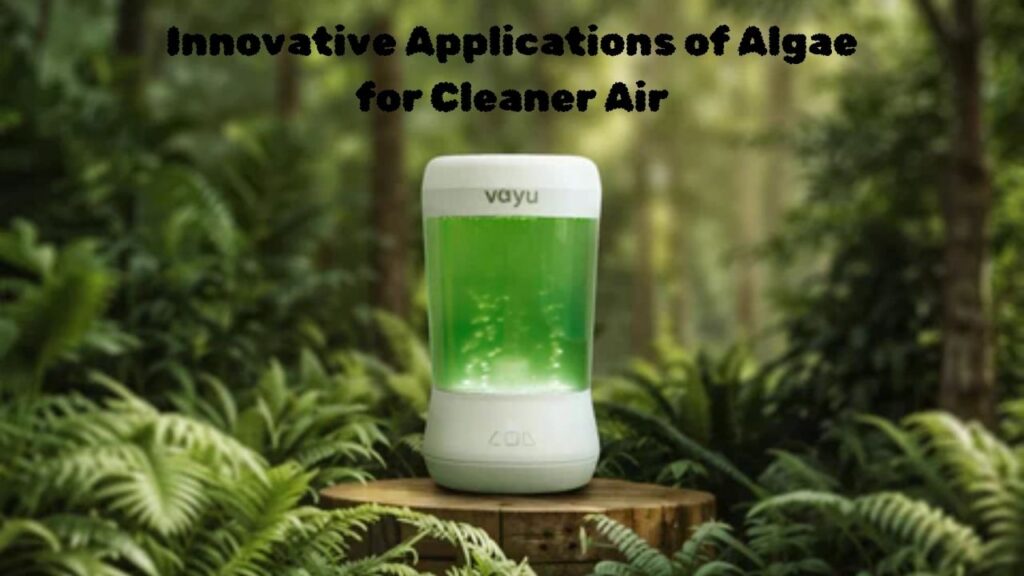
Algae provides an effective and natural solution for indoor air purification. Small units or panels with specific algae can be installed in a small space, which absorb CO₂, produce oxygen and convert volatile organic compounds (VOCs) and fine particles into biomass. This system increases the purity of the air in the home, office or other indoor spaces, improving the AQI and providing a healthy breathing environment for humans, while also reducing electricity consumption and the need for chemical filters.
Benefits of Using Algae for Air Quality Improvement
Algae acts as a natural and effective solution for air purification, which is beneficial for both the environment and human health. They absorb CO₂ and other harmful gases to produce oxygen, convert volatile organic compounds (VOCs) and fine particles into biomass, which leads to a significant improvement in AQI.
The use of algae not only increases the purity of the air in indoor and outdoor environments, but also contributes to lower energy consumption, noise reduction, and environmental sustainability. Algae systems can be used for large-scale air purification at industrial and municipal levels, providing an environmentally friendly, economical, and sustainable solution.
How You Can Support Algae-Based Air Quality Solutions
You can support algae-based air purification solutions through your personal choice, awareness, and educational efforts. The system uses living microalgae that naturally absorb carbon dioxide (CO₂) and volatile organic compounds (VOCs) and produce fresh oxygen through photosynthesis. This process not only improves air quality, but also significantly improves the ecological balance and human health.
Conclusion
Algae not only enhances natural beauty but also plays an important role as Algae – a green solution to improve air quality index. They absorb carbon dioxide and other pollutants to produce oxygen, convert VOCs and fine particles into biomass, and provide clean air for indoor and outdoor environments. These green solutions based on algae are the best way to clean air sustainably, effectively and environmentally friendly in both urban and industrial environments.