
This method describes the biological control of common desert plant diseases. It involves beneficial bacteria that live inside the plants. These bacteria help the plants survive the extreme heat and disease.
You want a method that is both natural and safe. You want something that will work even in harsh weather. This idea attracts your attention because it offers a simple solution to difficult situations.
These tiny bacteria consist of bacteria and fungi. They keep plants strong even in poor soil. They prevent many common diseases, making desert plants healthier.
Understanding Biological Control for Desert Plant Diseases
Biological control of diseases in desert plants is based on the use of beneficial organisms. These organisms weaken harmful pathogens. These organisms help plants survive in heat and drought. This method provides natural protection to plants and reduces disease pressure.
Bacteria, fungi and other microorganisms play an important role in biological control. These organisms live near the roots of plants and prevent disease-causing pathogens. These organisms help plants grow and increase the plants’ tolerance to the harsh desert climate.
Why Arid Environments Create Unique Disease Pressures
In arid regions, intense heat, severe drought, and salinity reduce the natural strength of plants. These conditions create weakness in the plant body. When plants are weak, disease attacks become easier. The harsh environment also slows down the growth of plants and reduces their tolerance.
Some germs grow rapidly in arid regions. These germs remain strong in harsh weather and quickly affect plants. This environment also gives more strength to disease-spreading insects. These insects attack weak plants and diseases increase.
Proven Biological Control Strategies Used in Desert Plant Disease Management
Proven biological control strategies play an important role in preserving desert plants. These strategies reduce diseases through beneficial bacteria.
- Trichoderma spp.: This fungus weakens disease-causing fungi. It also takes up nutrients and inhibits harmful bacteria.
- Bacillus spp.: These bacteria thrive in the harsh desert. They produce special substances that kill disease-causing bacteria.
- Pseudomonas spp.: These bacteria grow rapidly near the roots. They produce special chemicals that inhibit harmful bacteria.
- Arbuscular Mycorrhizal Fungi (AMF): These fungi strengthen the roots of plants. They help them obtain water and nutrients and protect the plant from diseases.
Beneficial Microbes and Predatory Organisms That Protect Desert Vegetation
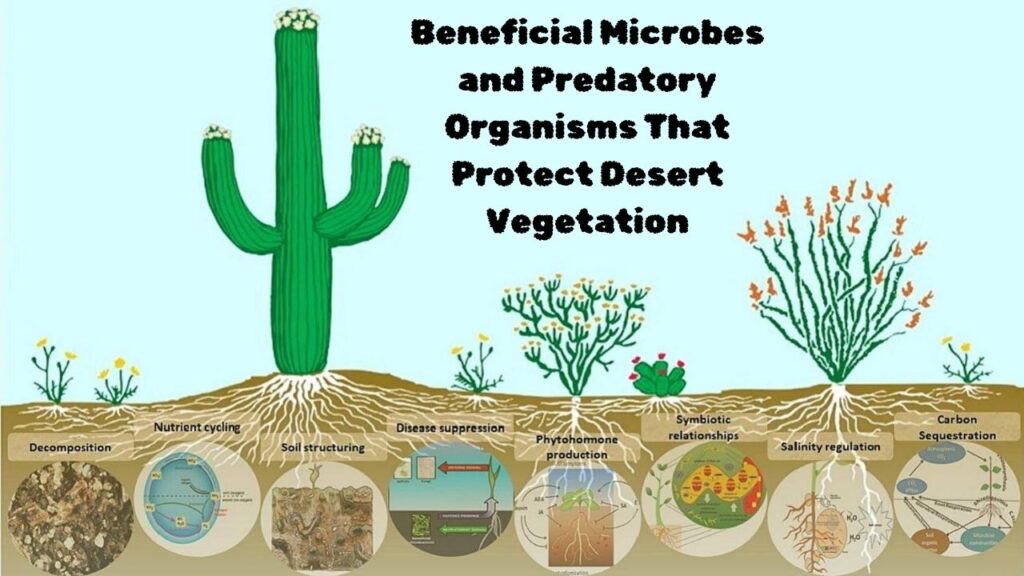
Desert plants stay healthy with the help of beneficial microbes and predatory organisms. These living helpers keep the soil balanced and reduce harmful pests and diseases.
Beneficial Microbes
- Cyanobacteria: They add nitrogen to the soil and help hold the soil together.
- Plant Growth-Promoting Bacteria (PGPB): These bacteria help plants stay strong in dry and salty conditions.
- Mycorrhizal Fungi: These fungi help roots absorb more water and nutrients.
- Fungi (Trichoderma spp.): These fungi reduce harmful fungi and keep plants healthy.
Predatory Organisms
- Arthropods: These insects and spiders clean the soil and eat harmful pests.
- Nematodes and Protists: These tiny organisms keep soil microbes balanced.
- Invertebrate Biocontrol Agents: These natural predatory insects reduce pest populations.
- Vertebrates: These animals spread seeds and control smaller animals to keep the ecosystem strong.
Identifying Common Desert Plant Diseases Before Applying Biological Control
Before applying biological control to desert plants, it is important to correctly identify the disease. Correct identification facilitates proper treatment and the plant recovers better.
Common Desert Plant Diseases
- Root Rot and Wilts: This disease damages the roots and weakens the plant.
- Stem Rots: This fungus damages the stem of the plant and the plant starts losing water.
- Powdery Mildew: This disease forms a white powdery coating on the leaves and shoots.
- Leaf Blights and Spots: These fungi and bacteria cause spots on the leaves and the leaves dry out.
- Crown Gall: This disease forms a round swelling near the root and reduces the growth of the plant.
Desert-Friendly Natural Solutions
Natural solutions for desert plants are derived from plants and minerals. These solutions reduce pests and diseases naturally.
Desert-Friendly Natural Solutions
- Neem Oil (Azadirachta indica): This oil keeps pests away and improves plant growth.
- Desert Gourd (Citrullus colocynthis) Extract: This is derived from the neem plant and protects against both insects and fungi.
- Essential Oils: These oils help kill insects and are used as a spray.
- Garlic Extract: This repels insects and protects the plant.
- Diatomaceous Earth: This dries out and kills insects when applied to soil or paths.
- Kaolin Clay: This forms a film on the plant and protects it from insects and the intense heat of the sun.
Conclusion
Biological control of common desert plant diseases is the most effective way to protect desert plants from diseases and pests. Beneficial bacteria, predators, and natural solutions work together to increase plant vigor and health. This method allows plants to thrive in drought, extreme heat, and poor soil conditions, and maintains the ecological balance of the desert.