Chemical Oceanography in the Middle East plays a fundamental role in understanding the chemical changes in the marine environment caused by industrial activities, climatic stresses and natural processes.
In warm regions such as the Red Sea, the Arabian Gulf and the Arabian Sea, heavy oil industry, large-scale shipping and high temperatures change the chemical composition of seawater. This is why it is important to understand the Reasons and Impacts of Chemical Oceanography in the Middle East, as these changes have a direct impact on salinity, nutrients, pollution and water quality.
Since the Middle East relies on these marine systems for its desalination, fisheries and coastal development, even small changes in marine chemistry have major environmental and economic impacts. Coral destruction, harmful algae blooms and increased acidification of the water are already clear examples of these impacts. This is why understanding the causes and effects of chemical changes is crucial to understanding and safeguarding the future of the region.
What is Chemical Oceanography?
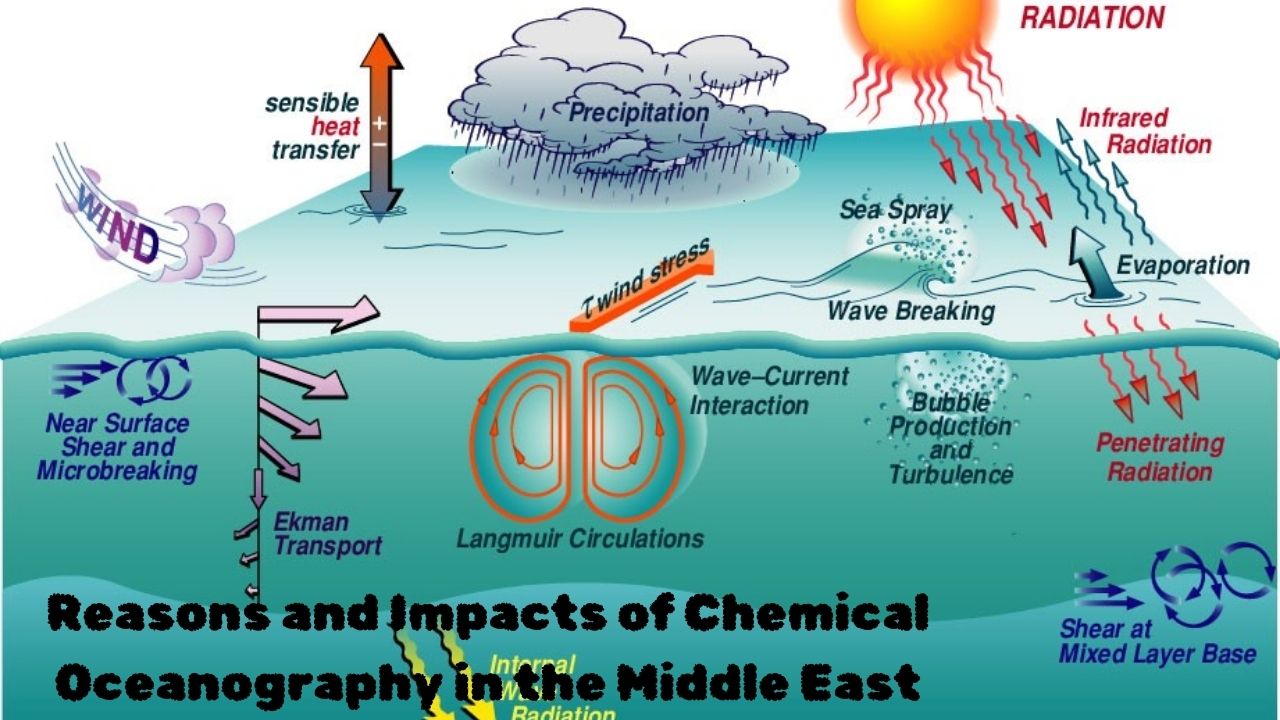
Marine chemistry is the field that understands the chemical composition of ocean water and the natural and human processes that occur in it. It includes the chemical exchanges between ocean water, the atmosphere, and the ocean floor, the cycling of elements such as carbon, nitrogen, and phosphorus, the effects of pollution, and the tracing of ocean processes through various isotopes. This knowledge explains how the oceans affect the global environment and the health of marine life.
Key Processes in Ocean Chemistry
Key processes in ocean chemistry revolve around how the ocean absorbs and releases CO2, forming carbonic acid and shaping the carbon cycle. Nutrients like nitrogen and phosphorus also regulate biological activity and influence overall productivity.
Elements from land, airborne particles, and hydrothermal vents further modify seawater composition through adsorption and precipitation. Human actions disrupt these natural processes because rising CO2 levels, nutrient pollution, and declining oxygen are steadily altering the ocean’s chemical balance.
Reasons for Studying Chemical Oceanography in the Middle East
Industrial Development and Pollution
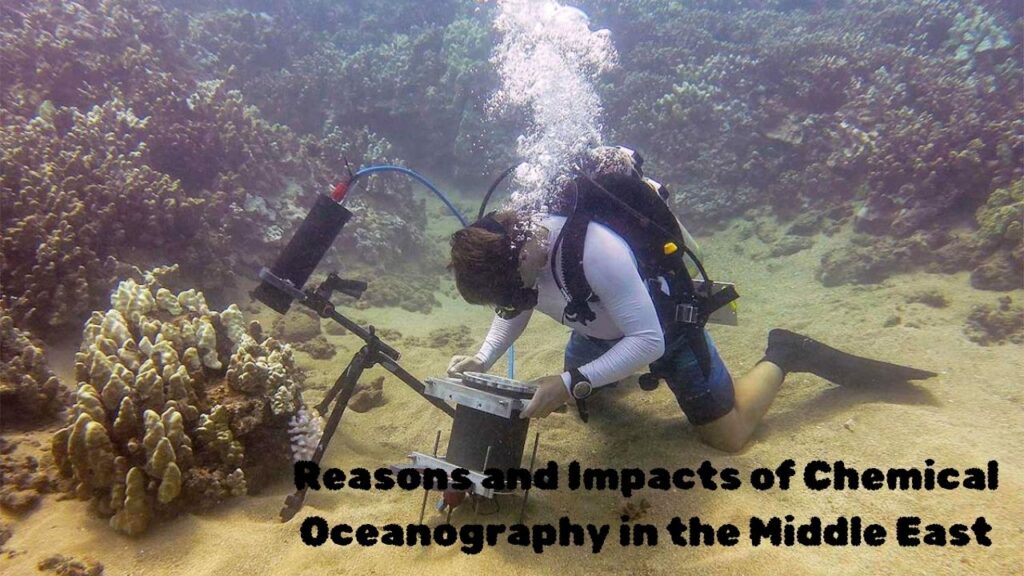
Rapid industrial development in the Middle East has had a profound impact on the chemical composition of the region’s oceans. Oil spills, refinery waste, and busy shipping routes add hydrocarbons, heavy metals, and chemicals to the water, disrupting the natural chemical balance. Coastal industries also add to the pressure through untreated waste and industrial waste. The resulting pollution disrupts nutrient balances, degrades water quality, and accelerates chemical changes that threaten marine life and fisheries.
Climate Change and Environmental Concerns
Climate change is rapidly altering the chemical balance of the Middle East’s oceans. Rising temperatures are increasing the acidity of the water and changing the salinity ratio by increasing evaporation. Reduced rainfall and coastal erosion are adding more sediment and pollutants to the ocean, which are affecting the flow of nutrients. These changes pose serious threats to corals, fish and other marine life, affecting the sustainability of entire ecosystems.
Biodiversity and Marine Ecosystems
Biodiversity in the Middle East’s marine environment is directly affected by ocean changes. When nutrient balance is disrupted or water is stagnant, corals, seaweed, fish, and other organisms cannot reproduce as they naturally do. Acidification and oxygen depletion also cause serious problems for the marine ecosystem. These changes affect the interconnectedness of marine ecosystems and their overall health.
Strategic and Economic Importance
The Middle East’s seas are not only of ecological importance, but also of great economic and strategic value. Oil transportation, shipping routes, fisheries, and the foundations of desalination plants are important parts of the region’s economy. Changes in ocean chemistry, such as water pollution or nutrient depletion, can directly impact these sectors. Therefore, understanding ocean chemistry is essential for the region’s economic development, food security, and strategic planning.
Conclusion
Understanding the reasons and impacts of chemical oceanography in the Middle East is essential for protecting both marine ecosystems and human livelihoods. Industrial activities, climate change, and pollution continuously alter seawater chemistry, affecting biodiversity, fisheries, and coastal resources.
By studying these chemical processes, policymakers, scientists, and industries can develop strategies to mitigate pollution, preserve marine life, and ensure sustainable economic development. Recognizing the region’s unique challenges emphasizes the urgent need for coordinated action to safeguard the Middle East’s oceans for future generations.
FAQs
What is chemical oceanography and why is it important in the Middle East?
Chemical oceanography studies the chemical composition of seawater and the processes affecting it. It is crucial in the Middle East to monitor pollution, protect marine ecosystems, and support fisheries, desalination, and coastal economies.
How does industrial pollution affect ocean chemistry in the Middle East?
Industrial pollution in the Middle East releases chemicals, heavy metals, and waste into the sea, disrupting natural chemical cycles. This alters nutrient balance, increases acidity, and harms marine life and coastal resources.
What are the major impacts of chemical oceanography on marine life in this region?
Chemical oceanography reveals how changes in seawater chemistry affect marine life, including coral reefs, fish, and plankton. Altered nutrient levels, acidity, and oxygen depletion threaten biodiversity and ecosystem stability in the Middle East.
How is the Middle East preparing for changes in ocean chemistry?
The Middle East is addressing ocean chemistry changes through monitoring programs, pollution control, and sustainable coastal management. Regional research and environmental policies aim to protect marine ecosystems and support fisheries and desalination.