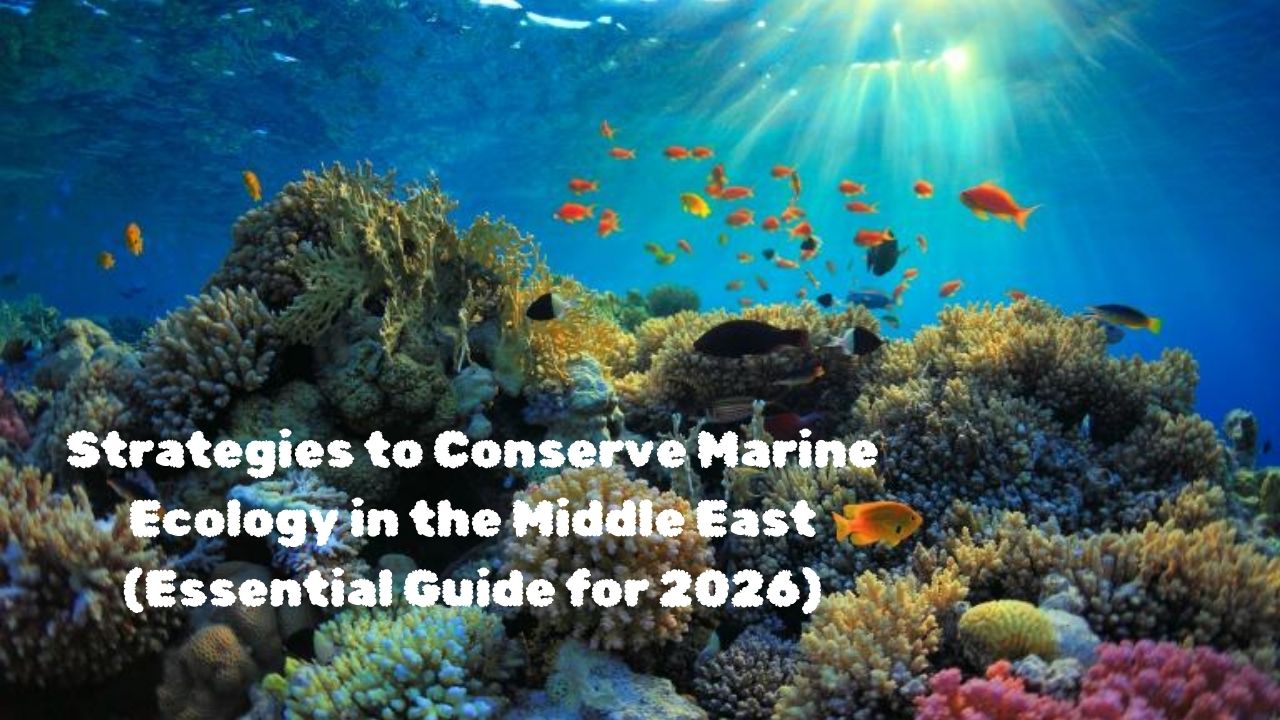
Preserving the Middle East’s marine ecosystem is no longer just a necessity, but a responsibility for future generations. Uncontrolled coastal development, pollution, and irresponsible fishing have put the delicate marine life at serious risk. In such a situation, choosing effective strategies has become the greatest need of the hour.
That is why measures such as establishing marine protected areas, promoting sustainable fishing, and preventing illegal hunting are of utmost importance. At the same time, through better waste management, investment in scientific research, and public awareness campaigns, we can breathe new life into the marine environment. These measures not only maintain the natural balance, but also strengthen the economic future of the region.
Why Marine Ecology Conservation in the Middle East Matters in 2026
Protecting the marine environment in the Middle East is crucial because it is the foundation of the region’s ecological balance, economic development, and food security. Accelerating climate change and human activities have put marine life at risk, affecting fisheries and local livelihoods. If we better protect these environments, biodiversity is strengthened, climate stability is increased, and sustainable food resources are secured for future generations.
Key Threats Impacting Marine Ecology Across the Middle East
Marine ecology across the Middle East is facing serious pressure as rapid human activity and shifting climate patterns continue to reshape coastal environments. These threats are weakening marine habitats and putting long-term biodiversity and local livelihoods at risk.
Key threats include:
- Climate Change: Rising sea temperatures and ocean acidification are damaging coral reefs, seagrass beds and mangroves.
- Coastal Development: Heavy construction and land reclamation projects are destroying natural habitats and breeding grounds.
- Pollution: Oil-related activities and industrial waste pose constant risks to marine life.
- Desalination Effluents: Highly saline discharge and chemicals from desalination plants alter water quality.
- Marine Debris and Wastewater: Microplastics and untreated runoff contaminate coastal waters.
- Overfishing: Key species are being harvested at unsustainable levels while harmful fishing gear worsens the problem.
- Invasive Species: Non-native species introduced through shipping disrupt ecological balance and threaten local marine life.
Essential Strategies to Conserve Marine Ecology in the Middle East (2026 Edition)
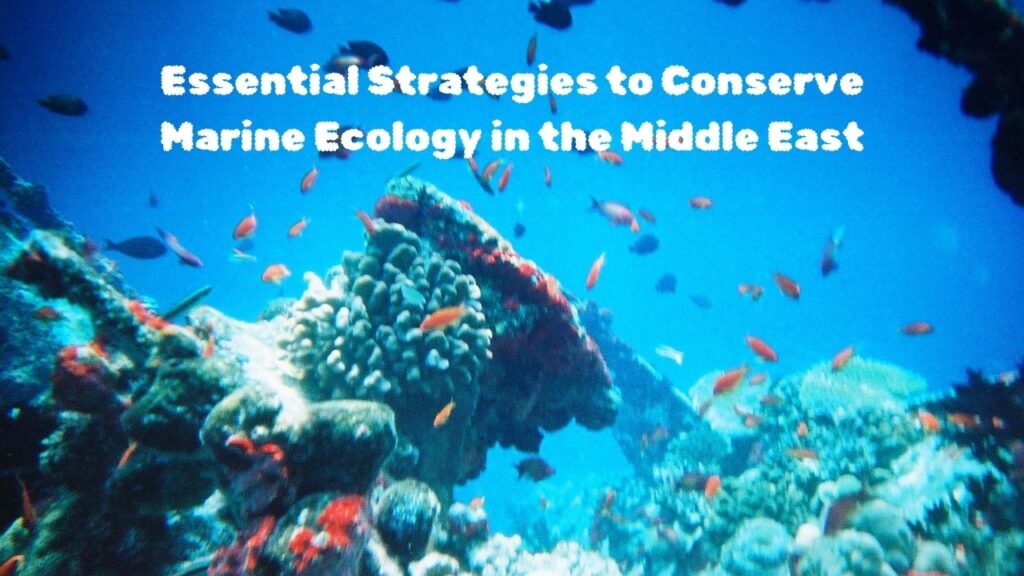
Strengthening Marine Protected Areas (MPAs)
Marine protected areas play a fundamental role in managing the marine environment and allowing affected life to recover. Expanding and enforcing MPAs in the Middle East not only improves fish populations but also protects corals, coastal habitats and fragile ecosystems.
Effective management requires clear rules, regular monitoring and collaboration between governments, scientists and local communities. When these areas are managed properly, economic benefits such as sustainable fishing and eco-friendly tourism are also strengthened.
Sustainable Coastal Development Policies
Sustainable coastal development means planning in a way that protects the environment, supports local communities and allows responsible economic growth. These policies help keep coastal ecosystems healthy while ensuring a safer future for the next generations.
Points include:
- Marine Spatial Planning (MSP): Organizing different coastal activities so decisions stay clear and based on real evidence.
- Environmental Protection and Conservation: Enforcing rules to reduce pollution, prevent habitat loss and support restoration projects.
- Climate Change Adaptation: Preparing for rising sea levels, erosion and flooding with stronger coastal protection measures.
- Social Equity and Community Engagement: Including local communities in decision-making and ensuring benefits reach everyone.
- Economic Sustainability: Supporting eco-tourism, responsible aquaculture and other environment-friendly economic activities.
- Research and Innovation: Investing in science to understand coastal changes and create better long-term solutions.
- Risk Management: Reducing environmental risks by using careful, precautionary planning.
- Governance and Coordination: Ensuring strong cooperation between government, private sector and community groups.
Promoting Sustainable Fisheries Management
Sustainable fisheries management is essential to maintaining healthy marine ecosystems and fish populations in the Middle East. Overfishing and destructive fishing practices have depleted important species and are threatening local livelihoods. To promote sustainability, it is essential to set catch limits, regulate fishing gear, and prohibit fishing during specific seasons so that stocks can rebuild.
Small-scale fishers are supported to adopt responsible practices by providing training and resources. Through monitoring and community involvement, these measures preserve fish populations, ensure food supplies, and maintain the balance of marine systems.
Conclusion
Protecting the marine environment in the Middle East is no longer just an option, but a critical responsibility for environmental sustainability, economic development and food security. Measures such as strengthening marine protected areas, promoting sustainable fisheries, controlling pollution and engaging communities can help protect this fragile ecosystem.
Collaboration between governments, scientists, businesses and local communities is essential. Through sustained effort and effective policies, the Middle East can protect its marine life, ensure sustainable livelihoods and build healthy and resilient oceans for future generations.